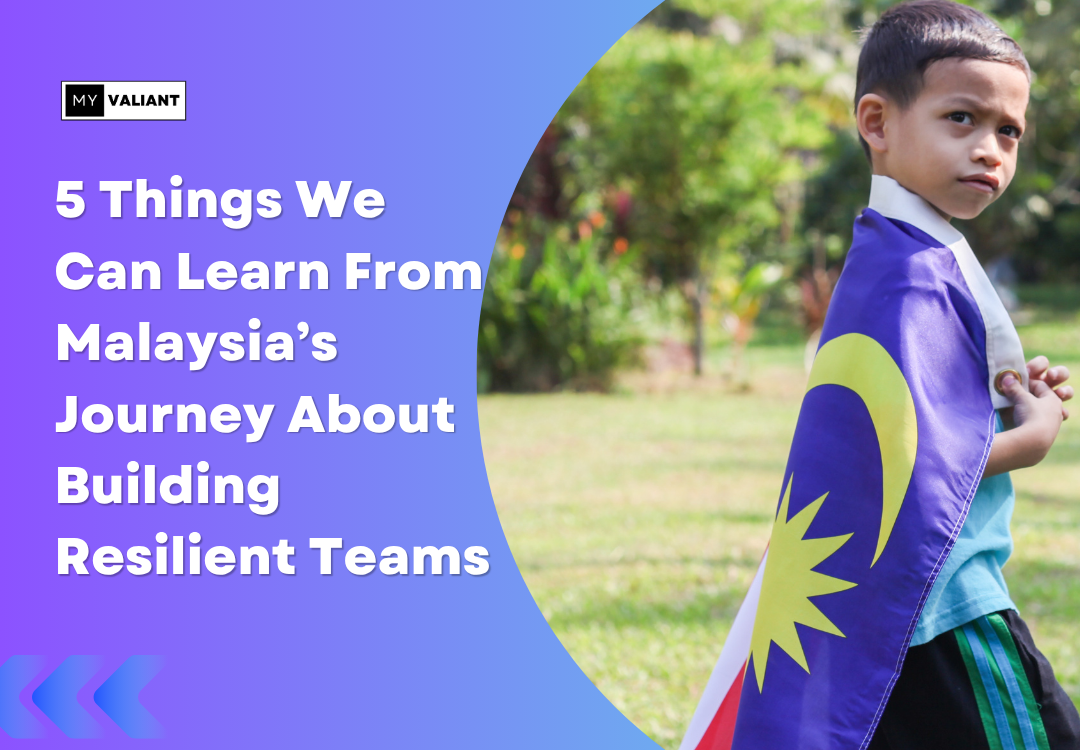
Merdeka is more than a long weekend, a holiday getaway or singing patriotic songs. It is a reminder of the people, sacrifices and collective effort that made independence possible — and of the values that continue to shape Malaysia today.
Every year, Merdeka arrives with familiar excitement.
The flags go up. Patriotic songs fill the air. Families make plans for the long weekend. Some of us travel, catch up with friends or simply enjoy a well-deserved break.
There is nothing wrong with celebrating in these ways.
But Merdeka is also an opportunity to remember what happened before 31 August 1957. Independence was not handed to Malaya without effort. It was pursued through years of political organisation, public engagement, negotiation and cooperation among leaders and communities.
The road to independence required patience, courage and a shared belief that a better future was possible.
Those lessons are not limited to history. They also offer valuable insights into how we build stronger, more resilient teams at work.
1. Resilience: Progress Often Requires Patience and Persistence
The pursuit of independence was not achieved overnight.
Before Merdeka, Malaya experienced significant political and social challenges. The people and leaders of the time had to navigate the aftermath of the Japanese Occupation, the Malayan Union proposal, political uncertainty and the complex process of building a future that could be accepted by different communities.
The journey required persistence, even when progress was slow and the outcome was uncertain.
The Alliance leaders, including Tunku Abdul Rahman, worked through negotiations with the British and engaged with the people to build support for self-government. Their efforts eventually led to the formation of the Reid Commission in 1956, which helped lay the constitutional foundation for an independent Malaya.
This reminds us that resilience is not simply about enduring difficulty. It is about continuing to work towards a goal, even when the path is complicated.
Workplace challenges can feel very different from the challenges faced during the independence movement, but the principle remains relevant. Projects may face delays. Priorities may change. Results may take longer than expected.
Resilient teams do not give up at the first obstacle. They reassess, learn from setbacks and keep moving forward.
Progress may be gradual, but consistent effort can create lasting change.
2. Diversity: Unity Does Not Mean Everyone Is the Same
The road to independence also demonstrated the importance of working across communities.
Malaya was, and remains, a diverse society. Different ethnic groups had different experiences, concerns and priorities. Building a shared future required leaders to recognise these differences while finding common ground.
The cooperation between representatives of the Malay, Chinese and Indian communities through the Alliance was an important part of the negotiations that led to independence. It showed that unity does not require people to erase their identities or agree on everything.
Instead, unity requires people to listen, understand one another and work towards shared objectives.
The same applies to the workplace.
A resilient team does not need everyone to have the same background, personality or point of view. Different experiences can help teams identify risks, challenge assumptions and develop better solutions.
However, diversity only becomes a strength when people feel respected and included.
Building a strong team means creating space for people to contribute, ask questions and express different perspectives constructively.
A team becomes stronger when its differences are acknowledged and its common purpose is clear.
3. Collaboration: Independence Was a Collective Achievement
Merdeka is often associated with Tunku Abdul Rahman, especially through the historic declaration of independence at Stadium Merdeka on 31 August 1957.
But independence was not the achievement of one person alone.
It was made possible through the contributions of political leaders, community representatives, negotiators, civil servants and ordinary citizens. The process involved discussions between local leaders and the British government, constitutional work by the Reid Commission and the support of people across Malaya.
The famous declaration may have taken place on one stage, but the journey to that moment involved many people working towards the same goal.
This is an important lesson for modern teams.
No major project is completed by one person alone. Success often depends on people from different departments, disciplines and levels of experience contributing their expertise.
Collaboration means more than attending meetings or dividing tasks. It means sharing information, supporting one another and understanding how individual responsibilities contribute to a wider objective.
Strong teams do not compete over who receives the most credit. They focus on what needs to be achieved and recognise that progress is a shared effort.
When people work together with trust and purpose, individual contributions can become collective progress.
4. Adaptability: The Path Forward May Change
The journey towards independence also required adaptability.
The political landscape changed significantly over time. The Malayan Union proposal introduced in 1946 was met with strong opposition, leading to the formation of UMNO and eventually the creation of the Federation of Malaya in 1948.
Later, the pursuit of self-government continued through negotiations, constitutional discussions and changing expectations about Malaya’s future.
The people involved had to respond to new circumstances without losing sight of the larger goal.
This is what adaptability looks like in practice. It does not mean abandoning our principles whenever circumstances change. It means finding new ways to move forward while remaining focused on the outcome that matters.
Organisations today face constant change through technology, AI, automation, digitalisation, new work models and evolving employee expectations.
Teams that insist on doing everything the same way may struggle to remain effective. Resilient teams are willing to learn, adjust their approach and consider better ways of working.
Sometimes, adaptability begins with a simple question:
“What does this situation require from us now?”
Employees who continue developing their skills and organisations that remain open to change are better prepared for uncertainty.
The ability to adapt helps teams remain relevant without losing sight of their purpose.
5. Leadership: Courage, Responsibility and Shared Purpose Matter
The pursuit of Merdeka required leadership at many levels.
Tunku Abdul Rahman played a central role in leading the negotiations for independence, but the movement also depended on the courage and commitment of many others. Community leaders represented the concerns of their people. Negotiators worked through difficult discussions. Citizens supported the call for self-government.
Leadership was not only about holding a formal position. It was also about taking responsibility, representing others and having the courage to pursue a difficult goal.
This remains true in the workplace.
Leadership does not always come with a title. It can mean taking ownership when something goes wrong, supporting a colleague, speaking up about an important issue or helping a team stay focused during uncertainty.
Managers and senior leaders have an important responsibility to provide direction and create the conditions for people to succeed. At the same time, every employee can contribute to the culture and performance of a team.
A resilient workplace is built when people do not wait for someone else to solve every problem.
Everyone has a part to play in creating a more accountable, supportive and forward-looking team.
Merdeka Is More Than a Celebration
So, this Merdeka, go ahead and enjoy the long weekend.
Take that trip. Plan that getaway. Spend time with family and friends. Put up the Jalur Gemilang. Sing along to the patriotic songs. 🇲🇾
But when the celebrations are over, remember that Merdeka represents more than a public holiday.
It represents the persistence required to pursue independence, the cooperation needed to build a shared future and the courage to move forward despite uncertainty.
Take those values into the workplace too.
Be resilient when progress is slow.
Respect different perspectives.
Collaborate instead of working in silos.
Adapt when circumstances change.
And have the courage to take ownership and play your part.
Because Merdeka is not only about remembering the moment independence was declared.
It is also about remembering the people and collective effort that made that moment possible — and considering how we can continue building a stronger future together.
Just as Malaysia’s journey was shaped by people working towards a shared purpose, organisations are strengthened by resilient, diverse and committed teams.
🇲🇾 Selamat Hari Merdeka from MyValiant.
Here’s to building stronger people, stronger teams and a stronger Malaysia — one workplace at a time.